Blog
← Older posts Newer posts →Bloody Ships – Bloody Systems: A Managerial Reflection on the Centenary of the Battle of Jutland
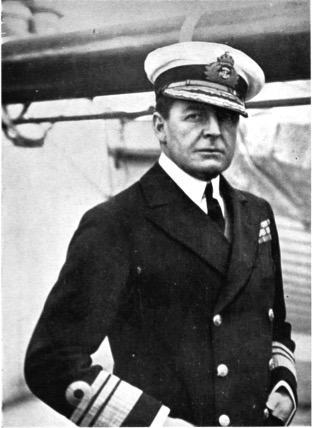
Vice Admiral David Beatty (1871-1936)
“There seems to be something wrong with our bloody ships today…” remarked Vice Admiral David Beatty to his Flag Captain. Beatty was commander of the Battle Cruiser Fleet at Jutland, and his cool comment belied the scale of the catastrophe. It was 4.26 pm on May 31, 1916 and from the upper bridge of the battle-cruiser Lion he had just seen her sister ship, Queen Mary, disappear in a shattering blast as both main magazines exploded. Twenty minutes earlier another battle-cruiser, the Indefatigable, had vanished in a sheet of smoke and flame and, although Beatty did not know it at the time, the Lion herself had narrowly missed a similar fate only by flooding her Q turret magazine with sea water.
At the Battle of Jutland, the greatest sea battle of all time, the British Navy would lose three battle-cruisers carrying over three thousand men in less than three hours. It was not bad luck, it was bad management: the result of the Navy’s inability to manage a complex system from design through to execution. For the roots of the disaster lay in the design of the ships over a decade earlier. Thus the problem was systemic and Beatty’s puzzled comment represents one of the more dramatic instances of the bewildered reaction of a CEO to symptoms of systemic problems in the field. Continue reading →
Posted in Change, General | Tagged battle-cruiser, Bismarck, complex systems, context, David Beatty, HMS Hood, HMS Lion, Horace Hood, Indefatigable, innovation, Invincible, Jutland, Nelson, Queen Mary, Trafalgar | Comments Off on Bloody Ships – Bloody Systems: A Managerial Reflection on the Centenary of the Battle of JutlandDown With Descartes! If You Can’t Measure It You Had Better Manage It

Rene Descartes “I think therefore I am”

Peter Drucker 1910-2005 Social Ecologist
In Landmarks of Tomorrow (1959) Peter Drucker wrote “We still profess and we still teach the world-view of the past three hundred years… a Cartesian world-view.” It is a world-view redefined by Lord Kelvin (1824-1907): “… when you can measure what you are speaking about, and express it in numbers, you know something about it; but when you cannot measure it, when you cannot express it in numbers, your knowledge is of a meagre and unsatisfactory kind; it may be the beginning of knowledge, but you have scarcely, in your thoughts, advanced to the stage of science, whatever the matter may be.” Everyone in management knows it as “If you can’t measure, you can’t manage it”, an aphorism often incorrectly attributed to Drucker. Given his attitude toward Kelvin’s world-view, he would never have said anything like that.
The Cartesian world-view assumes that the whole is equal to the sum of its parts. It is a static, mechanical world, where all causality is linear. Inertia is the norm, conscious, deliberate thought is the only valid form of inquiry and science is the only valid form of knowledge. Drucker wrote, however, that a new world-view was emerging: “Underlying the new concepts of modern physics is a unifying idea of order. It is not causality, though, but purpose….The new world-view, in addition, assumes process. Every single one of these concepts embodies in it the idea of growth, development, rhythm, or becoming. These are all irreversible processes…” Later he contends, “We need…a strict discipline of qualitative and irrevocable changes such as development, growth or decay. We need rigorous methods for anticipation of such changes. We need a discipline that explains events and phenomena in terms of their direction and future state rather than in terms of cause – a calculus of potential, you might say, rather than one of probability. We need a philosophy of purpose, a logic of quality and ways to measure qualitative change. We need a methodology of potential and opportunity, of turning points and critical factors, of risk and uncertainty, constant and timing, “jump” and continuity. We need a dialectic of polarity in which unity and diversity are defined as simultaneous and necessary poles of the same essence.” (my emphasis)
Posted in Change, General | Tagged Berlin, change, Descartes, Drucker, ecological perspective, Iraq, judgement, Kelvin, management principles, measurement, purpose, science, systems thinking, weight-loss | Comments Off on Down With Descartes! If You Can’t Measure It You Had Better Manage ItCultivating Organizations – Background to The New Ecology of Leadership
 I am now publishing my blogs both here and on LinkedIn. In this case this article is already on the site (in Latest News About the Book), so just the link is here. It’s an article I wrote last year for Leading & Change, an online magazine: Cultivating Organizations: The Background to The New Ecology of Leadership
For Innovation – Think Small – Like a Mindful Mollusk!

Inky the octopus
The story of Inky the octopus made headlines around the world this past week. In case you have been in Outer Mongolia (without the internet) Inky was a male common octopus on exhibit in New Zealand’s National Aquarium on the east coast of the North Island. One day his keepers noticed that he had disappeared. No one saw him go but they could follow his trail. He had squeezed through a small gap in the lid of his tank, slithered across the floor and disappeared down a narrow 50-metre long pipe that led to the sea. Inky was the size of a rugby ball but, like all octopi, he could get through holes the size of coins (the only limit is the size of an octopus’ beak, which can’t be shrunk).
As I was reading the story I was reminded of the ecological relationship between scale and opportunity. Inky was looking at his environment for tiny escape routes. As a result his world was full of potential to be explored. Larger scale creatures might not see these opportunities at all. We see this phenomenon everywhere in the history of innovation. While Xerox was developing its first commercial plain paper copier, the 914, it was desperately short of cash and other resources. It explored licensing the technology to IBM, who turned to Arthur D. Little, the well-known technology consultants, to get their opinion. Little surveyed potential owners of the machine. It was complex to use, could produce one copy every 26 seconds and had a tendency to set the paper alight. Every machine came with a built-in “scorch eliminator” (fire extinguisher). There is no doubt, however that everyone was put off by its size. The 914 was a large cube, roughly four feet square, and weighed an astonishing 650 pounds! It needed a separate room to house it. After a year of study the technologists dismissed the machine as being far too cumbersome and expensive. They concluded that there would never be a market for more than a few thousand of them. IBM rejected Xerox’ overtures and the rest is history. The 914 went on to be a colossal success and Xerox eventually placed (the machine was leased on a per copy charge) more than 600,000 of them.
Posted in Change, General | Tagged 914, Arkansas, Arthur D. Little, Ben Franklin, change, ecology, IBM, Inky, innovation, mindfulness, mollusk, National Aquarium, New Zealand, octopus, Sam Walton, scale, Sear Roebuck, Walmart, Xerox | Comments Off on For Innovation – Think Small – Like a Mindful Mollusk!Changing Our Models of Change: Nothing Lasts Unless It Is Incessantly Renewed”

RSA House in London
In a blog last year, Matthew Taylor, Chief Executive of the Royal Society of the Arts wrote “Ideas about social and economic reform are only as useful as the model of change that goes with them.” I agree completely. We need to look at our current models of change and develop more useful ones. But we have to probe the foundations of our mental models much more deeply.
A review of our mainstream models of change (at least those in the private sector in the West) would reveal that, for the most part, they are firmly embedded in a modernist, utilitarian view of organizations and work. Often underpinned by assumptions from mainstream economics, individuals are seen as rational actors, making rational choices to maximize individual utilities. The change agent himself (these are usually masculine models) stands outside the system, diagnosing the conditions of those within and then acts top-down to arrange rewards and sanctions to obtain the desired behaviours.
Our mainstream models of change are overwhelmingly instrumental; the logic is one of engineering efficiency, searching for new ways and means to reach given ends that are set externally (e.g. “maximizing shareholder value”). Mechanical and architectural metaphors abound: the organization is a “smooth-running machine” based on “blueprints” or a “well-designed structure” made up of “building blocks”. The challenge is to overcome “inertia” and “resistance to change”. From this perspective, stability is the norm and change is the problem. Think of the change mantra, attributed (wrongly) to Kurt Lewin: unfreeze-change-refreeze. Change from this perspective is accomplished by the formulation and implementation of new context-free policies and principles that will act as “roadmaps”. Management is seen as a value-free technical practice.
Posted in Change, General | Tagged Anglo-Saxon capitalism, blueprints, change, complex systems, ecocycle, ecological perspective, efficiency, engineering, Jonathan Haidt, Kurt Lewin, Matthew Taylor, narrative, objectivity, passion, power, reason, roadmap, RSA, servants of power, shareholder value, trust, unfreeze-change-refreeze | Comments Off on Changing Our Models of Change: Nothing Lasts Unless It Is Incessantly Renewed”Capitalism as an Ecological Process

Valuation: Measuring and Managing the Value of Companies
On April 2 The Economist published a book review of Valuation: Measuring and Managing the Value of Corporations, a 700-page manual on corporate finance and shareholder value published by McKinsey & Company. The views in both the book and the review come across as a reactionary defense of what Lynn Stout has called the myth of shareholder value. The essential argument is that there is nothing wrong with the principle of shareholder value, just in the way that its “rules” have been either applied or ignored.
As an aside, regular readers of my blog will know that I am allergic to the notion that a practice like management consists of the application of theoretical rules or principles. It reflects a Cartesian frame of mind that thought should precede action and that principles abstracted from one situation can be “applied” in others. Hence the relentless procession of business books claiming to have discovered the “secrets” of success. In a management context “principles” turn out to be either good intentions or desirable outcomes – formal and final explanations in Aristotle’s framework. These are “true” but largely unhelpful as guides to action. For guides to action managers are interested in material and efficient causes and, unlike principles, they are specific to each and every organization. In other words, they are context-dependent, which requires an ecological perspective rather than a Cartesian one.
Posted in Change, General | Tagged Andy Haldane, Anglo-Saxon capitalism, Bank of England, Cartesian Management, community, complex systems, context, ecocycle, ecological perspective, innovation, management principles, McKinsey, shareholder value model, Valuation | Comments Off on Capitalism as an Ecological ProcessThe Ecodynamics of Donald Trump: Can The Centre Hold?

Donald Trump
The rise of Donald Trump has been a puzzle to many political pundits and a shock to observers around the world. What explains his appeal and his ability to mobilize people who, for a long time have felt excluded from the political process? Typically populists like Trump arise in times of political unrest, when the existing order is failing and a significant portion of the population feel that there is a need for radical change. But why now in the USA and what are the conditions that have allowed Donald Trump’s campaign for the Republican Presidential nomination to flourish?
Ecological Processes
These questions becomes easier to understand when one looks at society and its institutions, not as static systems, but as ecological processes. From this perspective successful social institutions are conceived in passion, born in communities of trust, grow through the application of reason and mature in power. Here they tend to get stuck in systemic traps, structures that conserve the habits that made them successful, but render them inward-looking and insensitive to the changes that are going on outside. In his book, The Rise and Decline of Nations economist Mancur Olson described how, over time, vested interests and rent seekers clog the system and prevent meaningful change. Thomas Mann and Norman Orenstein give us a broad overview of this insidious process in Congress in their two books, The Broken Branch (2009) and It’s Even Worse Than It Looks (2011). Most importantly, they outline the changes that have led to the polarization of its members and the emergence of a quasi-parliamentary system, built upon opposition, in a constitutional republic where the separation of powers demands negotiation and compromise.
For a more systemic view of how both parties have unwittingly contrived to build a trap one can to turn to Lawrence Lessig’s fascinating 2011 book, Republic, Lost: How Money Corrupts Congress – and a Plan to Stop It. He showed how an economy of influence has emerged in Washington and bred what he calls dependency corruption. This is not straightforward votes-for-dollars bribery; that’s illegal and happens only rarely. It’s a far more deceptive process. At the root of the trap (in Lessig’s view) is the money that members of Congress need to run for office. With campaigning almost a nonstop activity (especially since the mid-1990s), so is the need to raise funds. This is a huge distraction from the business of government in its own right. The obvious source of funds is from those who have an interest in legislation, which means that Congress has to be concerned with issues that attract factional interests rather than the broader public interest. As a result Congress’ agenda consists of topics suitable for fund-raising and its members have little interest in simplifying regulation or tax codes: complexity enables them to raise funds from interested parties. Thus the concerns of Congress steadily diverge from the concerns of the population at large. In the medium term participation in the political process may drop but the resentment keeps on building…
Organizations and institutions can spin in systemic traps for decades. After all these are called ‘success’ or ‘capability’ traps and depend on the organization’s default habits that have made it successful. Typically policy will be focused on metrics that have proven to be key indicators of success in the past and these will likely exclude peripheral indicators of trouble. Take, for example, the bi-partisan commitment in Congress to free trade. It seems clear that, at least in principle, free trade should create widespread economic benefits to all parties involved. These are relatively easy to measure, particularly the immediate benefits to consumers. At the same time, however, there are concentrated losses that can devastate communities, destroying families and livelihoods. These are not easily measured and the adjustment process whereby displaced workers, at least in theory, learn new skills to build higher-value products is hard to track, let alone measure. Some economists now doubt that it happens in any significant way.
Economic “Prosperity” but Damage to the Social and Political Ecology
The recent uproar over Carrier’s move of its air-conditioning business to Mexico is a case in point. Carrier is relocating a 1,400-person factory to Monterrey from Indianapolis. South of the border workers will make about $20 a day compared with roughly $20 an hour in the American factory. The economics case for Carrier looks like a no-brainer, even after you take into account moving costs and any differences in education, work ethic, safety etc. But what about the costs in Indianapolis to communities families and livelihoods? The social safety net in the US is flimsy enough but going on welfare is hardly an alternative to well-paid, meaningful work that supports communities and their narratives. The damage to the social and political ecology is very real and hard to detect; that is until popular outrage and disenchantment boil over and give rise to Donald Trump. As one might expect from this thesis, the top four variables that have the strongest correlation with being Trump supporters are whites without high-school diplomas, who describe their heritage as “American”, live in mobile homes and either work or used to work in “Old economy” jobs. The next highest correlation is a history of voting for segregationists like George Wallace….
What Happens Next?

Fire in a California Forest
If this ecological perspective is roughly right it explains why Trump supporters are not concerned by his failure to come up with coherent policies. Trump articulates what they only feel and as long as he gives voice to their concerns they could care less about policy. Attacks on Trump from the Republican Establishment only reinforce their sense of being embattled and solidify their support for him. On the left Bernie Sanders appeals to a different constituency but one that also believes that the political system is broken and needs a revolution to reform it. Hillary Clinton, on the other hand, thinks that one can achieve results only by working within the system. At the moment she seems the candidate most likely to win the Presidency. If she does, the centre will hold – for the moment.
Whether the political centre can hold in the longer run, however, seems to depend on whether both parties, but the Republicans in particular, are sufficiently shocked to embrace radical change. If Donald Trump is the Republican candidate and the Republicans lose control of both the House and the Senate as a result, then they are likely to have to adopt real reform. This will mean taking seriously the advice of their remarkably hardheaded 2012 post-election autopsy and realizing that the coalition they have relied on for so long is irretrievably broken. To stand any chance of restoring their fortunes they have to de-emphasize ideology and move to the centre where they can appeal to a much broader range of voters especially the Hispanics. Only then can a bipartisan approach be developed toward escaping from the complex systemic trap into which American politics has fallen. If they can do this, then Donald Trump will be seen, in hindsight, as the necessary destructive force, the fire in the forest, so essential to the renewal of ecosystems. If they don’t, the fire will be bigger next time…
Posted in Change, General, Leadership | Tagged Bernie Sanders, Carrier, change, destruction, Donald Trump, ecological perspective, ecosystem, Hillary Clinton, Indianapolis, Lawrence Lessig, Mancur Olson, Mexico, narrative, Norman Orenstein, political ecology, Republican Party, social ecology, Thomas Mann | Comments Off on The Ecodynamics of Donald Trump: Can The Centre Hold?Pope Francis and the Environment – Transformational Leadership in Action
A version of this post appeared earlier this year in the blog of the Drucker Society of Europe:

Pope Franics’ informality and approachability have been a feature of his tenure
To students of management Pope Francis is a fascinating study in leadership and organizational change. From his surprise election as an outsider, the first non-European Pope in 1300 years and the first Jesuit in history, to his well-publicized efforts to shake up an aging institution by revisiting its mission and purpose, he exemplifies the behavior of a charismatic, transformational leader. His many actions to distance himself from the trappings of power that he believes separate him from the reality of the situation on the ground have been well documented. Now he has written a powerful, brilliantly-crafted papal letter (encyclical) on the environment, arguing that if the mission of the Catholic Church is “to serve the poor”, then degradation of the planet is the primary obstacle to this effort, because the poor suffer more than anyone else from the unintended consequences of headlong economic growth.
The encyclical is an astonishing document, written by a high-context, non-linear thinker, who takes a systemic, process view of organizations, institutions and the planet as a whole; “We are faced not with two separate crises, one environmental and the other social, but rather with one complex crisis which is both social and environmental. Strategies for a solution demand an integrated approach to combating poverty, restoring dignity to the excluded, and at the same time protecting nature.” Continue reading →
Posted in Change, General, Leadership, Uncategorized | Tagged Anglo-Saxon capitalism, business schools, crisis, culture, ecology, environment, externalities, faith, GNP, instrumental rationality, modernism, one-dimensional paradigm, Peter Drucker, Pope Francis, power, reason, Roman Catholic Church, science, social and moral development, transformational leadership | Comments Off on Pope Francis and the Environment – Transformational Leadership in ActionClaiming Our Humanity in a Digital Age: Big Questions in Vienna

The Drucker Forum
The theme of the 2015 Drucker Forum that ended in Vienna two weeks ago was “Claiming Our Humanity: Managing in a Digital Age”. Nearly 500 management academics, business people and management consultants from all over the world attended the two-day conference in Vienna.
The preliminary events began with a CEO Roundtable on the afternoon of Wednesday November 6. The opening ‘provocation’ was supplied by Tom Davenport and Julia Kirby’s June 2015 Harvard Business Review article “Beyond Automation”. In it they address the threat that artificial intelligence in the form of smart machines is encroaching on knowledge work to such an extent that it will lead to widespread unemployment. In the past machines took over work that was dangerous, dirty and dull. Now they seem to be taking over decision-making roles. Does it mean automation and the replacement of humans or is there scope for augmentation of human cognitive powers by machines? Should we be worried? The Davenport/Kirby shorthand answer, “Yes-No-Yes”, captured the both uncertainty of our questions about the future and the equivocality of the ‘answers’.
Posted in Change, General, Leadership, Strategy | Tagged Adam Smith, All Blacks, augmentation, automation, change, cult of efficiency, digital, Drucker Forum, European Enlightenment, haka, humanity, ideology of reason, Julia Kirby, Kevin Roberts, Peter Drucker, post-rational, Robin Chase, Saatchi & Saatchi, sociology of virtue, Super-VUCA, Tom Davenport | Comments Off on Claiming Our Humanity in a Digital Age: Big Questions in ViennaThe VW Debacle: How Large Successful Organizations and Institutions Can Become “Bad Barrels” And What To Do About It

The outlines of Volkswagen’s comprehensive program to defeat national auto emissions laws are becoming clearer. According to the New York Times the company began installing software designed to cheat on emissions test in 2008, when they realized that their new E89 diesel engine could not meet the pollution standards in the US. Three (now four) top managers who were involved in the development of that engine have been suspended. The NYT article goes onto mention that that it was also in 2008 that the CEO of VW, Martin Winterkorn, had vowed to triple the company’s sales in the US within ten years. When he became CEO in 2007 he had a reputation for being a detail-oriented manager who hated getting bad news and dealt harshly with subordinates who failed to meet their targets. All this in a company known generally for its high-pressure management methods…
The debacle at VW is just another instance of the alarming propensity for large, apparently successful organizations to spawn unethical and even criminal activity for long periods of time and then to cover it up. When they are eventually revealed, these activities can result in existential threats to the organizations involved. The recent General Motors cover-up of its faulty ignition locks is an obvious parallel but Johnson & Johnson (J&J) is another example of a corporation that has encountered more and more ethical issues in recent times. Only a few weeks ago NYT columnist Nicholas Kristof reported on J&J’s aggressive attempts to promote off-label uses of its mega-hit drug Risperdal. The company eventually pleaded guilty to misbranding the drug and was fined over $2.2 Billion. No individual executives were charged with any wrongdoing. As Kristof points out, Alex Gorsky, the executive responsible for the marketing of the drug in these ways has now been elevated to the job of CEO! This suggests that the internal reward systems for pursuing results at all costs can be very real. This incident occurred shortly after J&J’s tardy recall of faulty hip joints as well as the discovery of multiple quality problems in J&J’s factories. J&J used to be known as the “Credo Company” that always put its patients first. How it has drifted!
Posted in Change, General, Leadership, Strategy | Tagged Alex Gorsky, Anglo-Saxon capitalism, Aristotle, change, complex systems, context, creativity, crisis, destruction, diesel emissions, ecological perspective, efficient cause, General Motors, gun control, hip joints, ignition locks, J&J, Johnson & Johnson, material cause, means and ends, Risperdal, shareholder value, Volkswagen debacle, Winterkorn | 1 Comment ← Older posts Newer posts →Subscribe to David's Blog
-
Archives
- July 2026
- May 2026
- October 2025
- January 2025
- November 2024
- May 2024
- February 2023
- December 2022
- September 2022
- May 2022
- March 2022
- February 2022
- November 2021
- October 2021
- January 2021
- November 2020
- September 2020
- July 2020
- June 2020
- May 2020
- April 2020
- February 2020
- January 2020
- September 2019
- July 2019
- April 2019
- March 2019
- November 2018
- October 2018
- March 2018
- July 2017
- April 2017
- November 2016
- October 2016
- June 2016
- May 2016
- April 2016
- March 2016
- December 2015
- November 2015
- October 2015
- May 2015
- March 2015
- January 2015
- December 2014
- November 2014
- September 2014
- July 2014
- June 2014
- May 2014
- April 2014
- March 2014
- February 2014
- January 2014
- December 2013
- November 2013
- October 2013
- September 2013
- August 2013
- July 2013
- June 2013
- May 2013
- April 2013
- March 2013
- February 2013
- January 2013
- December 2012
- November 2012
- October 2012
- September 2012
- August 2012
- July 2012
- June 2012
- May 2012
- April 2012
- March 2012
- February 2012
-
Meta

David Hurst in Action

Consulting