Blog
← Older posts Newer posts →Fire and Ice: All I want for Christmas is a Sump Pump!

Willow tree “pruned” by the ice storm
It’s been a horrid two weeks week weather-wise in Southern Ontario. First we had a hard freeze, making it unusually cold for this time of the year, then we had a heavy snowstorm, which dumped about 30 cm of snow on us over a period of two days and now, over this past weekend, we had a major ice storm, which coated every branch and twig with 20-40 mm of ice. When I got up on Sunday morning and went outside I could hear large branches snapping throughout the neighbourhood. The wind was wafting through the woods in little gusts and you could hear the trees groaning as they swayed ponderously, unable to snap back resiliently against the forces being imposed on them.
All of which reminds one of change and how nature builds resilient ecosystems by continually stressing them. Many forests use fire and insect attack to do this and technically the forests of Southern Ontario are a wind-burst ecology; that is, they rely on microbursts of wind during storms to clear open patches into which new growth can come. But the weekend storm was a sharp reminder that they are also an ice storm ecology, using freezing rain as a giant pruning tool.
But enough of ecology for the moment: I was particularly aware of the weather because our house’s sump pump had stopped working; or rather it wouldn’t stop working – it was pumping but the water level wasn’t going down. The motor was getting hot, as they are not designed to run continually. Most Canadian houses have an internal pump that sits in a small sump in the basement and pumps out the ground water that flows into the lower levels, particularly during the spring thaw. They have a float, rather like those that one finds in toilet tanks, except that it works the other way around; when the water level in the sump gets high the pump runs until it drops below a certain level. The water is pumped outside, either into a storm drain or into the garden. About two years ago I had had to change our discharge to flow into the garden and it had worked fine but now the water wasn’t flowing…
Posted in Change, General | Tagged Christmas, ecology, fire, Holiday, ice, plumbing, pump, renewal, Southern Ontario, sump | 5 CommentsPope Francis – the Undercover Boss: “Sell your desk!”

Pope Francis in regular dress
The Undercover Boss is a television franchise that began in the UK in 2009, but has since spread to many other countries. It features the experiences of senior executives working incognito as entry-level employees in their own companies to see exactly how the company’s customers are being treated and the challenges that their employees face in delivering good service. A week or so ago there was the delicious hint that Pope Francis himself might be going out at night as an “undercover boss” to distribute alms to the poor and experience their plight first-hand.

Archbishop Konrad Krajewski
The suggestion occurred during an interview with Archbishop Konrad Krajewski, the energetic 50 year-old who Francis has appointed as the Vatican “Almoner”. The Vatican has since issued a necessary denial that the Pope ever goes out at night in this way. But the spirit behind the thought that he might do so is instructive. When he appointed Krajewski, Francis gave him the following advice, “You can sell your desk. You don’t need it. You need to get out of the Vatican. Don’t wait for people to come ringing. You need to go out and look for the poor.”
Real results in any organization rarely reside at head office and this is especially true of so-called “commodity” businesses, where one’s product or service is not easily differentiated by design or brand. I can remember some of my best insights into the wholesale steel business came when I went out in the trucks to deliver steel on the back roads of Wisconsin. It meant an early start at 5am. The trucks were loaded the night before and one had to get an air seat installed on the passenger side of the cabin to replace the standard boneshaker. But the insights into the business were invaluable. One learned quickly about the practical challenges of getting into and out of a customer’s yard, as well as gaining invaluable information about the state of their business, both in its organization and their levels of operation. This was different from the kind of information that our salespeople could get by going through the front door and comparing the two sources was often revealing.
Posted in Change, Leadership, Strategy | Tagged almoner, careerism, Catholic Church, commodity, community, customers, entrepreneurial spirit, Krajewski, narrative, network, opportunity, Person of the Year, productivity, spirit of capitalism, Time, Vatican | 2 CommentsDrucker’s Intent and Why MBO Fails

Peter Drucker (1910-2005) Was he an existential rationalist?
Last week I blogged about mission command – auftragstaktik – a philosophy of command-and-collaboration developed by the German General Staff over a period of about eighty years, beginning in the 19th Century. Today its elements can be found in the field manuals of the world’s leading armed forces. While one finds the words in the manuals, however, the habits and behaviours that underpin mission command are more difficult to emulate. Mission command is not just a set of tools and techniques that can be learned and “applied”. If humans and their organizations were “blank slates” – computers that could be programmed – then such a cut-and-paste approach might work, at least in principle. But they aren’t and it doesn’t. One has to adopt the whole philosophy that supports mission command and take the time to develop the individual habits and institutional disciplines that allow it to work effectively.
At the Drucker Forum this year I had the good fortune to meet Peter Starbuck, who did his doctoral thesis on the work of Peter Drucker. After discussions with him about his book, “Drucker’s MbO”, and while writing the last three blogs, it struck me that Peter Drucker’s Management By Objectives suffers from the same complexities as mission command. That is, it is not a set of tools and techniques that can be overlaid on any organization and be expected to work effectively; one has to adopt the philosophy that underpins it too. So one has to ask: “What is the philosophy that underpins MBO? What was Drucker’s intent?”
Posted in Change, General, Leadership, Strategy | Tagged Anglo-Saxon capitalism, auftragstaktik, befehlstaktik, Descartes, detailed command, dichotomy, Drucker Forum, Efficiency Movement, existential rationalist, Frederick Taylor, German General Staff, Gestalt, Heidegger, instrumental rationality, intuition, key performance indicators, Kierkegaard, KPI, Lynda Gratton, management by objectives, MBO, mission command, Peter Drucker, philosophy, self-discipline, Soviet Union, Sputnik, tension, wicked problems | 5 CommentsMission Command: An Elusive Philosophy Whose Time Has Come

The 5th Annual Drucker Forum November 14-15 2013
This is the third blog in my series of reflections on the 5th Drucker Forum held in Vienna November 14-15, 2013. Among the many things that make this event so stimulating and memorable to attend is the numerous conversations that “bubble” up during the coffee and meal breaks among people who may never have met before. There are a lot of senior folk among the participants, with a wide range of experience, and they don’t hesitate to express their views! An additional bonus is that, unlike in many other conferences, the major speakers don’t fly in “seagull-style” to deposit their views and leave; they are usually there for the duration and are easily accessible during these informal sessions. As a result, while one may come out of the Forum physically tired, one is intellectually invigorated!
My blog this week is inspired by a question on , when the discussion turned to project implementation and one participant asked “What about the leaders’ intentions?” What ensued was a discussion about mission command, the approach developed by the famed German General Staff in the 19th Century and espoused, if not always practiced, by all the leading armed forces around the world. This concept is now making its way into management. It seems that we may not be moving, as many pundits claim, from an era of “command-and-control” to one of “communicate and cooperate” but to a more creative, paradoxical condition of “command and collaborate”.
Posted in Change, General, Leadership, Strategy | Tagged auftragstaktik, befehlstaktik, boundaries, command and collaborate, complex systems, Drucker Forum, execution gap, German General Staff, mission command, mission tactics, nested hierarchy, Peter Drucker, Russian dolls, scale, The Practice of Management | 1 CommentThe Map and The Territory: Complexity as Challenge and Opportunity

The 5th Annual Drucker Forum November 14-15 2013
My blog this week is an extended version of a comment I made a couple of days ago on Adrian Wooldridge’s (the Schumpeter columnist) report on the 5th Drucker Forum in The Economist. It also picks up from last week’s blog, in which I reported on the .
The overall theme of the 5th Drucker Forum was “Managing Complexity” and one of the inadvertent spins that title may have put on the sessions was that complexity was something to be coped with and reduced rather than a phenomenon that could also be embraced and explored. Thus one of the themes that emerged from a comment from the floor of the Forum was that while complexity is certainly a challenge, it is also an opportunity.

Fractal Complexity in Florets of Broccoli
A fundamental source of complexity not mentioned in the conference plenaries, but which was discussed on our project management panel, is fractal or scale complexity. Benoit Mandelbrot in his book, The Fractal Geometry of Nature, illustrated this kind of complexity by asking “How long is the coastline of Britain?” It turns out that the answer is scale-dependent – the length of the coastline depends upon the scale at which you measure it. For example, the CIA World Factbook records it 7,723 miles (no scale mentioned); the U.K. Ordnance Survey measures it at 11, 073 miles (scale 1:10,000). If one measured it with a micrometer, it would be much longer still. At the limit the length of the coastline zooms to infinity.
This is not just a geographical oddity; it applies in many areas. Consider the challenges of managing a modern car manufacturing process, where the tolerance of skin panels in the best plants is less than 0.5mm. Compare that with a British car manufacturing process from the 1950’s, where body tolerances of 0.5 inches were considered good going! The former is a much more complex, fine-grained process requiring a highly sensitive system that detects errors quickly, learns and responds rapidly. It has to stick as close to the root of the error as possible. The result is a lean production process of the kind pioneered by Toyota, which demands the engagement and attention of everyone on the shop floor. In the coarse-grained 1950s plant all it took was a worker with pot of molten tin at the end of the line to fill in the gaps! No learning on the shop floor was required…
Posted in Change, General, Leadership, Strategy | Tagged Christensen, complex systems, complexity, Drucker Forum, formulation, fractal, implementation, job-to-be-done, learning, Mandelbrot, map, Martin Wooldridge, projects, Roger Martin, scale, Schumpeter, strategy, territory, tolerance, Vienna | Comments Off on The Map and The Territory: Complexity as Challenge and OpportunityYou Can’t Herd Cats, But They Will Hunt Together

Cascade Canyon Grand Teton National Park Wyoming
Over the weekend I got back from Vienna, where I attended the 5th Annual Peter Drucker Global Forum, the theme of which was “Managing Complexity”. Last year I attended my first of these extraordinary conferences on the strength of my prize-winning essay, which I had entered for the Peter Drucker Global Essay Challenge. This year I returned and a few weeks before the session was asked to be a panelist on the topic of “”.
I must confess that my heart had sunk a little when I saw the words “project management”. Almost everything I have read about the topic over the years has depicted a process that seemed to flow like a Cartesian cascade in a hard-rock canyon. All the thinking appeared to be done by the folk at the top and all the work was done by those at the bottom, where their behaviour was constrained by a straightjacket of action plans and deadlines imposed from above. This impression had been matched by my experience in the companies I had worked for, where I came to think of “project management” as a tool for corporate oppression. “Stretch goals” were handed down from on high with arbitrary deadlines from which there was no appeal. “Administrative practices” were applied to get them done. Deviations from those action plans were likely to show up in one’s performance review. “Make it happen” was the corporate mantra.
Posted in Change, General, Leadership, Strategy | Tagged administrative practices, Cartesian cascade, complex systems, global forum, herding, herding cats, hunter-gatherer, hunting, hunting dynamics, Johan Roos, John Hagel, let it happen, make it happen, Peter Drucker, Philip Diab, project management, pull, push, stretch goals, Terry Cooke-Davies | Comments Off on You Can’t Herd Cats, But They Will Hunt TogetherEuropean Union: If You Have Them By Their Wallets, Will Their Hearts and Minds Follow?

Three Artifacts of Change
Last Thursday I was the opening speaker at the International Forum for Future Europe held November 7- 8 in Vilnius, Lithuania. The theme of the conference was Sustainable Development and Harmonious Society and the title of my talk was “European Renewal and the Ecology of Sustainability”. I had been given 20-30 minutes, which is the shortest time I have ever had to get across an ecological perspective, especially when dealing with such a large complex system as the European Union. I decided to express the central message in terms of three memorable artifacts (see picture):
- An image of a forest in springtime as a reminder of the value of nature as a model of how to achieve sustainability through continual renewal
- A symbol of constant change in the form of a golden Moebius strip or infinity loop to remind us of the processes of ecological change
- A quote “Nothing lasts unless it is incessantly renewed” by Charles de Gaulle. He was writing about the French Army in 1942 but the thought has much broader application!
The presentation was very well received by the approximately 300 attendees in the Lithuanian Parliament buildings and kicked off two days of presentations and discussions on a wide variety of sub-topics related to the overall theme.
Posted in Change, General, Leadership, Strategy | Tagged buy-in, change, Charles de Gaulle, community, complex systems, ecocycle, ecological perspective, ECSC, European community, European integration, European Union, French army, means and ends, Moebius strip, narrative, national identity, Nigel Farage, power, power trap, Thirty Year War, Tony Judt, UKIP, Vilnius | 1 CommentHeading for London, Vilnius and Vienna

Vilnius, Lithuania
This week I am travelling to London England, which I will use as my base to attend conferences in Vilnius, Lithuania and Vienna, Austria. In Vilnius I am the opening speaker at the International Forum on the Future of Europe. The conference forms part of a series of meetings that began on July 1 when Lithuania assumed the Presidency of the Council of the European Union for a six-month term. The Council of the European Union (not to be confused with the European Council!) is analogous to the upper house of a bicameral legislature such as the Senate in the USA, the Bundesrat in Germany or the House of Lords in the United Kingdom. In the European Union the lower chamber is the European Parliament. These are only two of seven EU’s institutions, which to an outsider is an organizational structure of byzantine complexity!
The actual title of the Vilnius conference is “Sustainable Development and Harmonious Society: Future Visions and Today’s Actions” and the title of my presentation is “European Renewal and the Ecology of Sustainability”. Next week I will report on the conference and how the presentation went down.

Inside Stephanskirche, Vienna
In Vienna I will be attending the 5th Annual Drucker Forum. Last year the essay I entered in the Drucker Global Essay Challenge won a top prize and I was invited to attend as a guest. It was an exhilarating experience and this year I am returning for more. The forum attracts top speakers and I will be participating as a panelist on the topic of “Project Management, Systems Thinking and Complexity”. I will report on the conference in future blogs.
I am in and out of London over the next two weeks and apart from some meetings I have set up I will also be attending “An evening with Roger Martin” put on by the Strategic Management Forum on November 12. It promises to be an exciting session that will take place in two distinctive venues of the kind that only cities like London can provide. I will report on it too in a future blog.
Posted in General | Tagged 40, Drucker Forum, European Union, Future Europe, Lithuania, renewal, Roger Martin, sustainability, Vienna, Vilnius | 1 CommentThe Success Equation: Untangling Skill and Luck in Business, Sports, and Investing

The Success Equation
I enjoy reviewing books for Strategy+Business as it keeps me up to date with what is happening in business book publishing and forces me to read and pay attention. With my book, The New Ecology of Leadership, out I have cut back from doing 16 books a year to about eight, most of which are covered in the Best Books essay which appears every winter issue. Back on May 28 Strategy + Business published my review of Michael J. Mauboussin’s The Success Equation. It is now available on my website and forms my blog for this week.
Humans are compulsive makers of meaning. The notion that the universe is random and that our activities might be insignificant is profoundly disturbing to us. So we construct webs of cause and effect to explain events and reassure ourselves that we are in charge of our lives. In doing so, says Michael J. Mauboussin, chief investment strategist at Legg Mason Capital Management, we often confuse skill and luck, setting ourselves up for future failures.
Posted in Uncategorized | Comments Off on The Success Equation: Untangling Skill and Luck in Business, Sports, and InvestingEvolution is Smarter than We Are
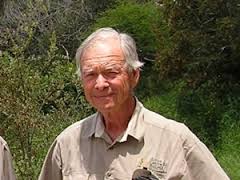
Allan Savory
The essence of an ecological perspective on organizations and their challenges is that one looks to nature and evolution to understand the workings of complex systems and how these problems have been solved in other contexts. From there one can use systems thinking to apply the lessons to the new situations. The role of ecological analogies in this is to help one understand complex webs of cause-and-effect.
A few days ago a colleague of mine referred me to the work of Zimbabwean biologist Allan Savory who has been restoring arid “desertified” landscapes using an approach that mimics nature’s. The traditional reasons given for desertification are over-population and over-grazing that exceed the carrying capacity of the land. Climate change is usually mentioned in the same breath. It turns out that this rather static view of ecosystems is incorrect – even when land is rested by removing both animals and people, it show little signs of healing.
Allan Savory suggests what he calls a more holistic approach to the problem, invoking the name of the famous South African soldier and statesman, Jan Christiaan Smuts. In 1926 Smuts coined the word in his book, Holism and Evolution, where he contended that matter, life and mind, far from being disparate “things”, were “a more or less connected progressive series of the same great Process.”
Posted in Change, General, Leadership, Strategy | Tagged Allan Savory, animals, change, Christensen, complex systems, ecological perspective, fire, Holism and Evolution, Innovator's Prescription, Jan Smuts, Karl Popper, landscape remediation, leukemia, Objective Knowledge, rest | 1 Comment ← Older posts Newer posts →Subscribe to David's Blog
-
Archives
- July 2026
- May 2026
- October 2025
- January 2025
- November 2024
- May 2024
- February 2023
- December 2022
- September 2022
- May 2022
- March 2022
- February 2022
- November 2021
- October 2021
- January 2021
- November 2020
- September 2020
- July 2020
- June 2020
- May 2020
- April 2020
- February 2020
- January 2020
- September 2019
- July 2019
- April 2019
- March 2019
- November 2018
- October 2018
- March 2018
- July 2017
- April 2017
- November 2016
- October 2016
- June 2016
- May 2016
- April 2016
- March 2016
- December 2015
- November 2015
- October 2015
- May 2015
- March 2015
- January 2015
- December 2014
- November 2014
- September 2014
- July 2014
- June 2014
- May 2014
- April 2014
- March 2014
- February 2014
- January 2014
- December 2013
- November 2013
- October 2013
- September 2013
- August 2013
- July 2013
- June 2013
- May 2013
- April 2013
- March 2013
- February 2013
- January 2013
- December 2012
- November 2012
- October 2012
- September 2012
- August 2012
- July 2012
- June 2012
- May 2012
- April 2012
- March 2012
- February 2012
-
Meta

David Hurst in Action

Consulting